
The science of Supplamine®
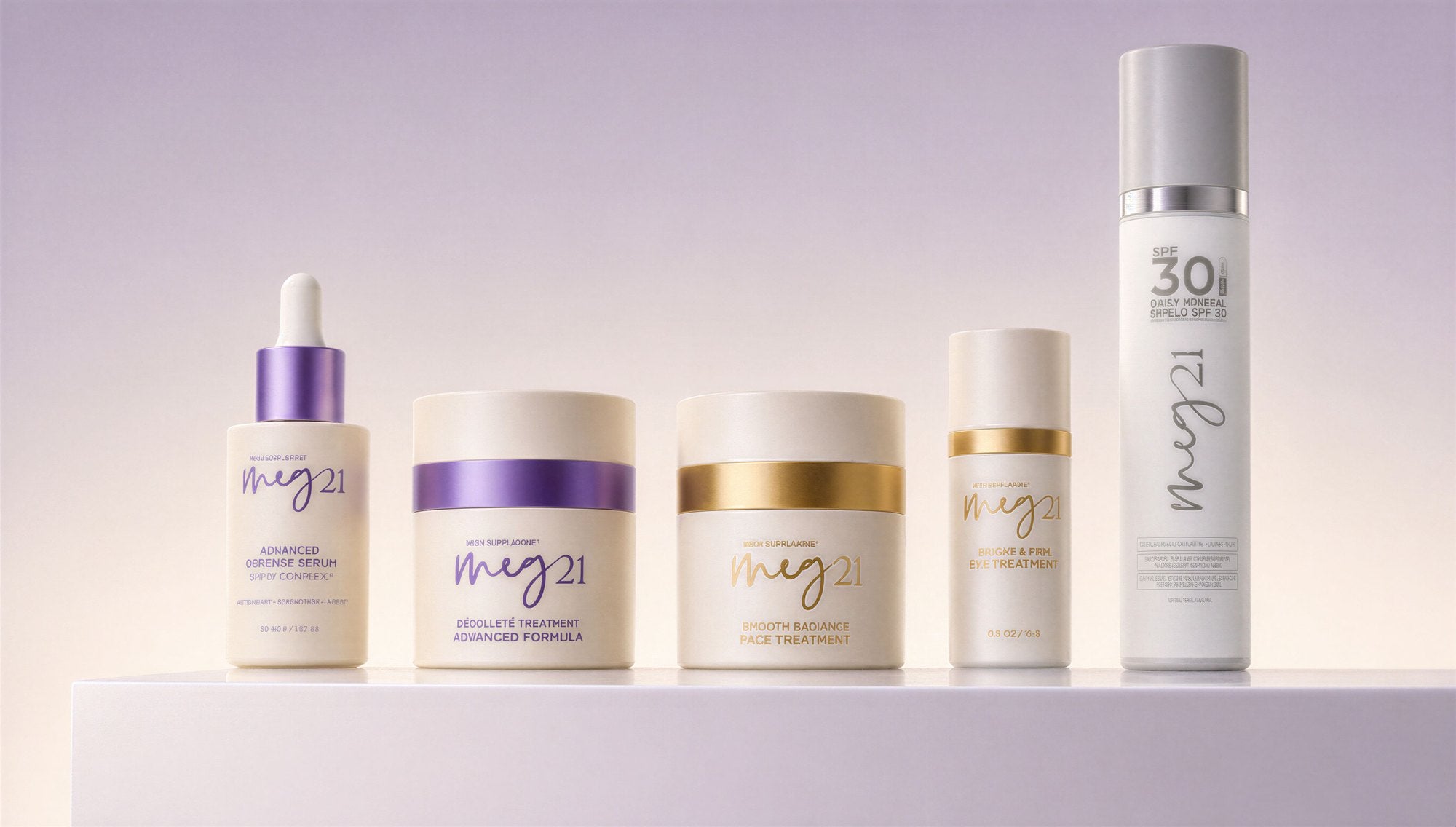
Skincare built around glycation, the sugar-driven process that stiffens collagen and elastin over time. Supplamine®, our patented anti-glycation technology, is in every MEG 21 treatment.
Developed by Dr. Annette Tobia, PhD, from glycation research pioneered at Fox Chase Cancer Center. Dispensed by physicians and clinically tested on skin.
Where anti-glycation fits
Three key drivers of skin aging. A typical routine covers the first two. Supplamine® is there for the third.

UV damage
Breaks down collagen and elastin. Wrinkles, sunspots, loss of elasticity.
Addressed by sunscreen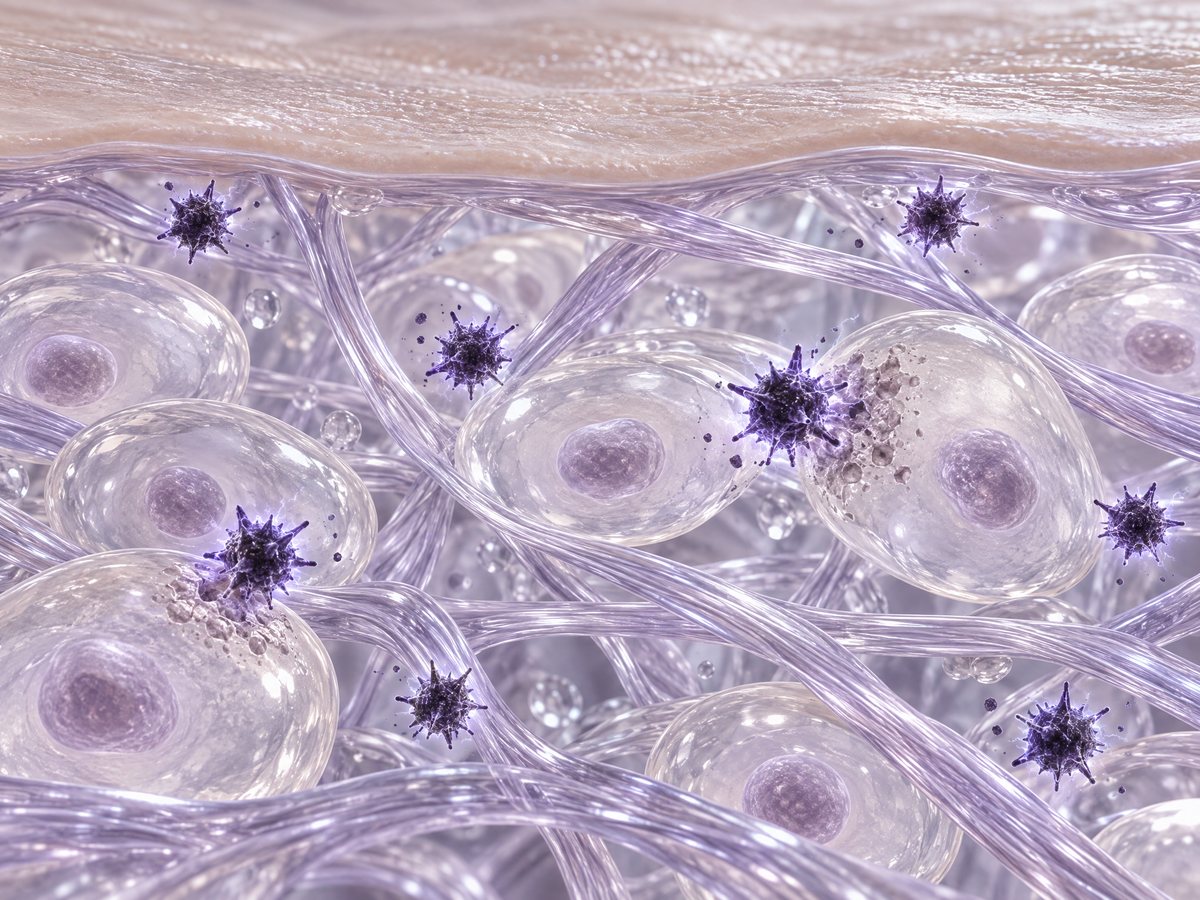
Oxidative stress
Free radicals damage cells. Dullness, uneven tone, premature aging.
Addressed by antioxidants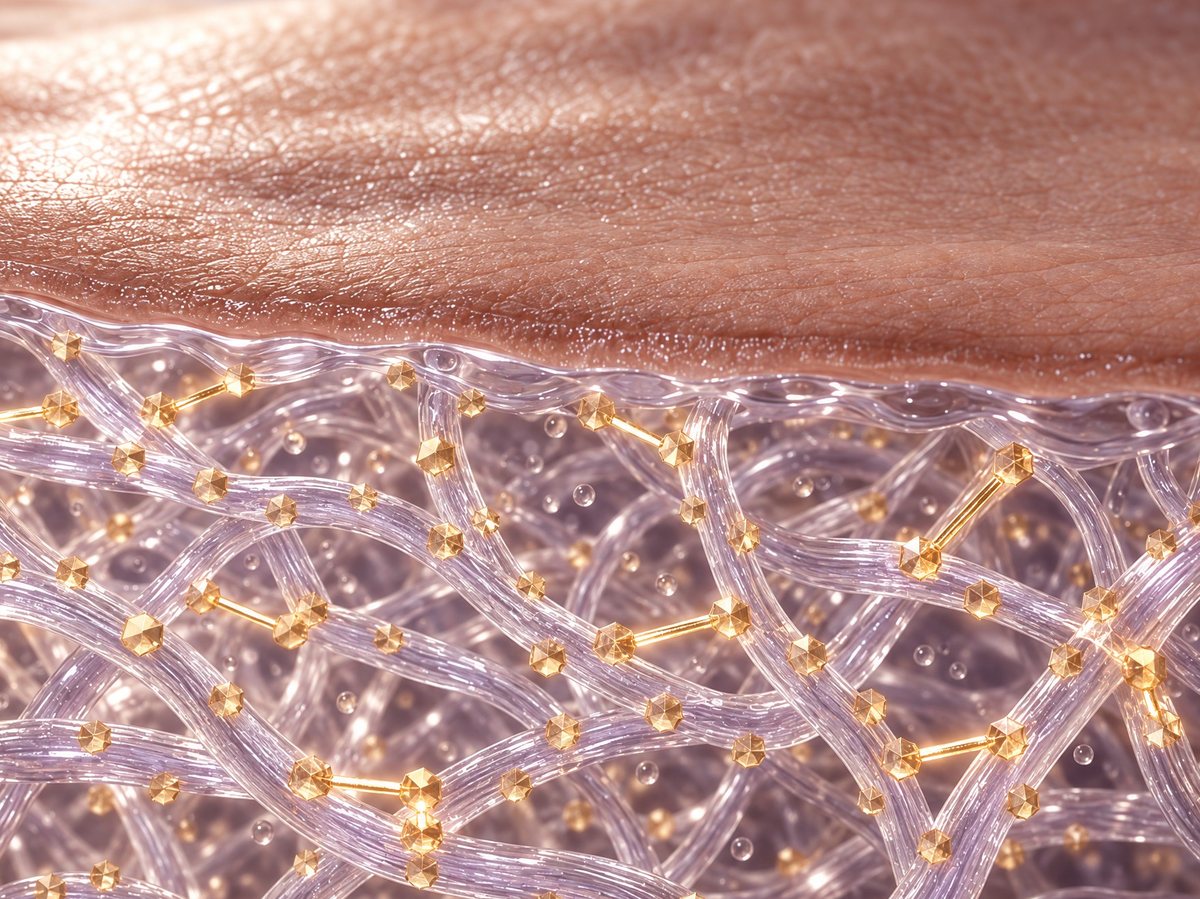
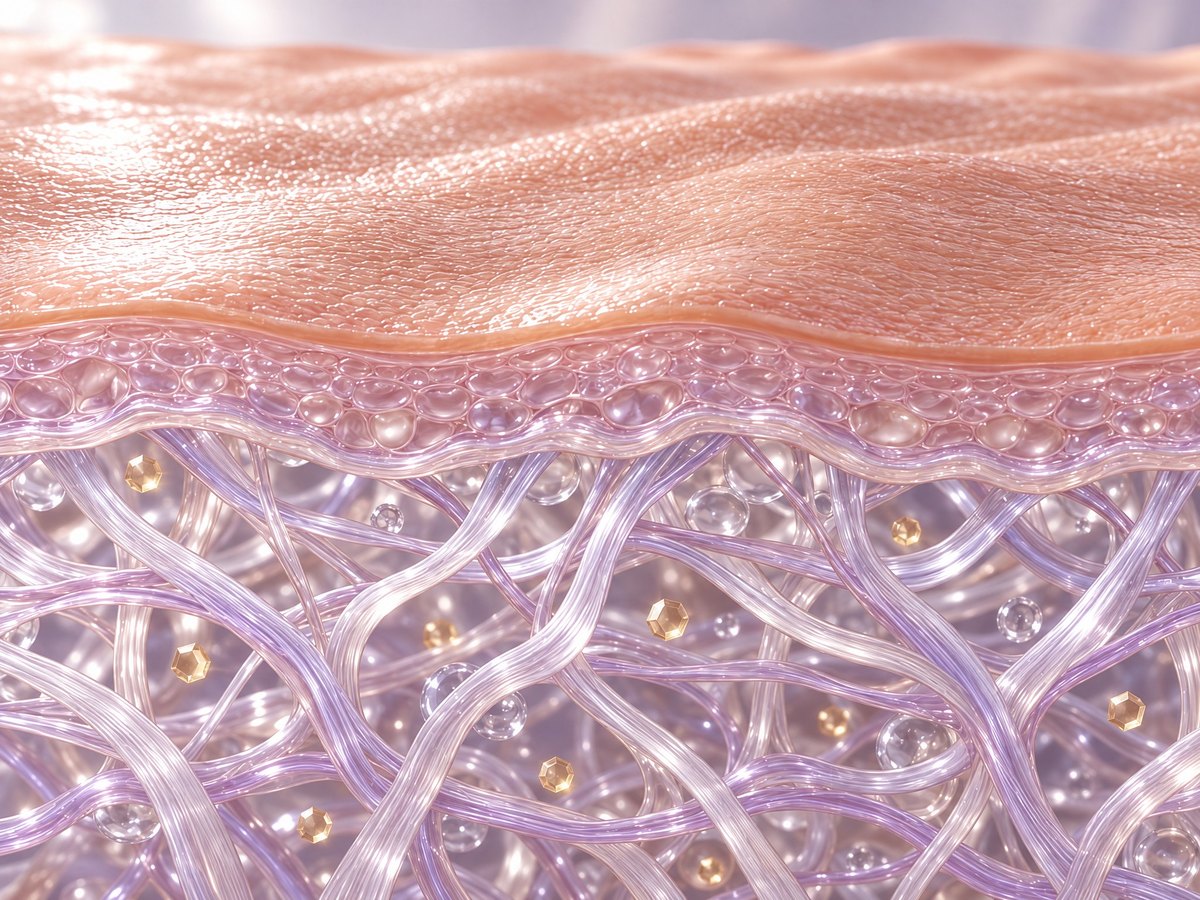
Glycation
Sugar reacts with collagen and elastin, forming AGEs that stiffen the fibres.
Addressed by Supplamine®Images are for illustration purposes only.
What glycation does to skin
Glycation is one of the contributing factors to visible skin aging.
Supple fibres
Collagen and elastin coil and flex.
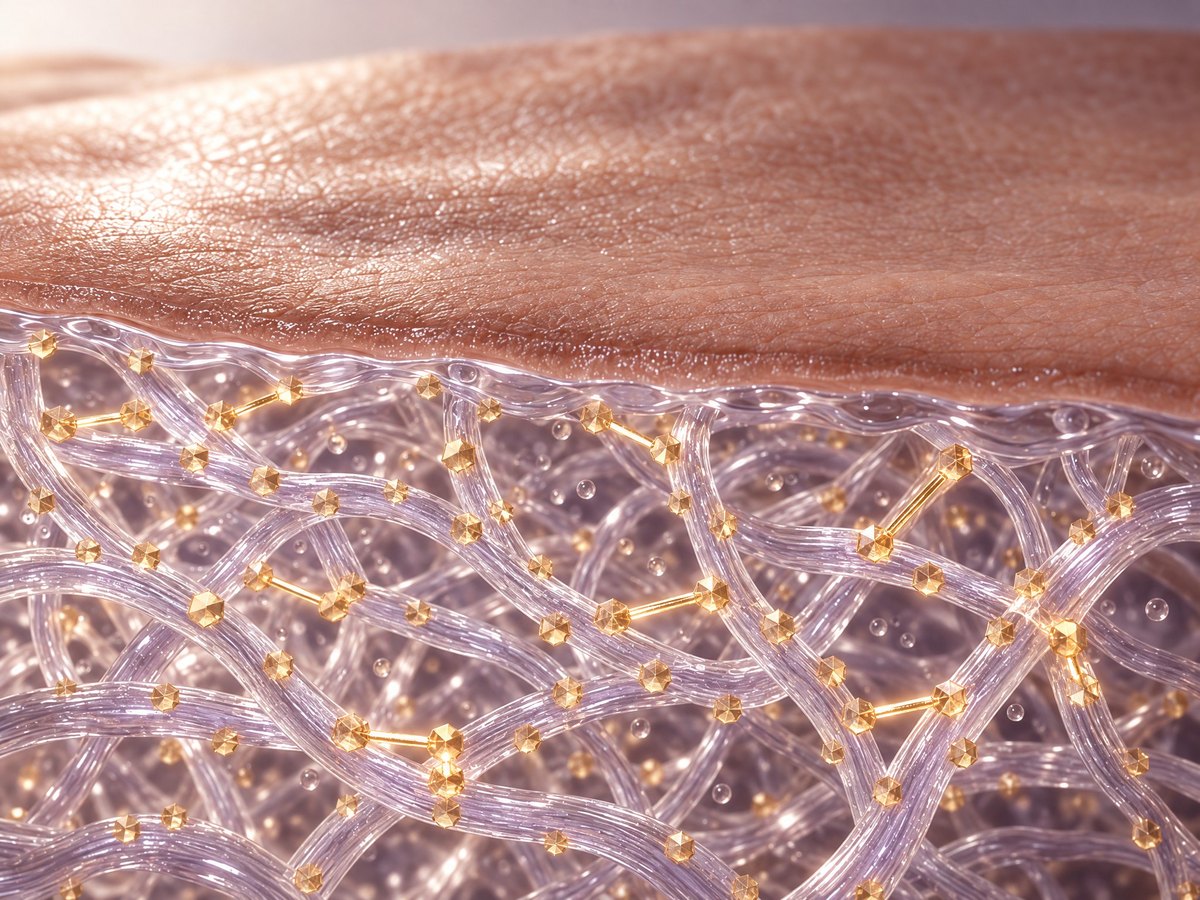
Sugar reacts
Over time, sugar reacts with the fibres in a multistep process called glycation.
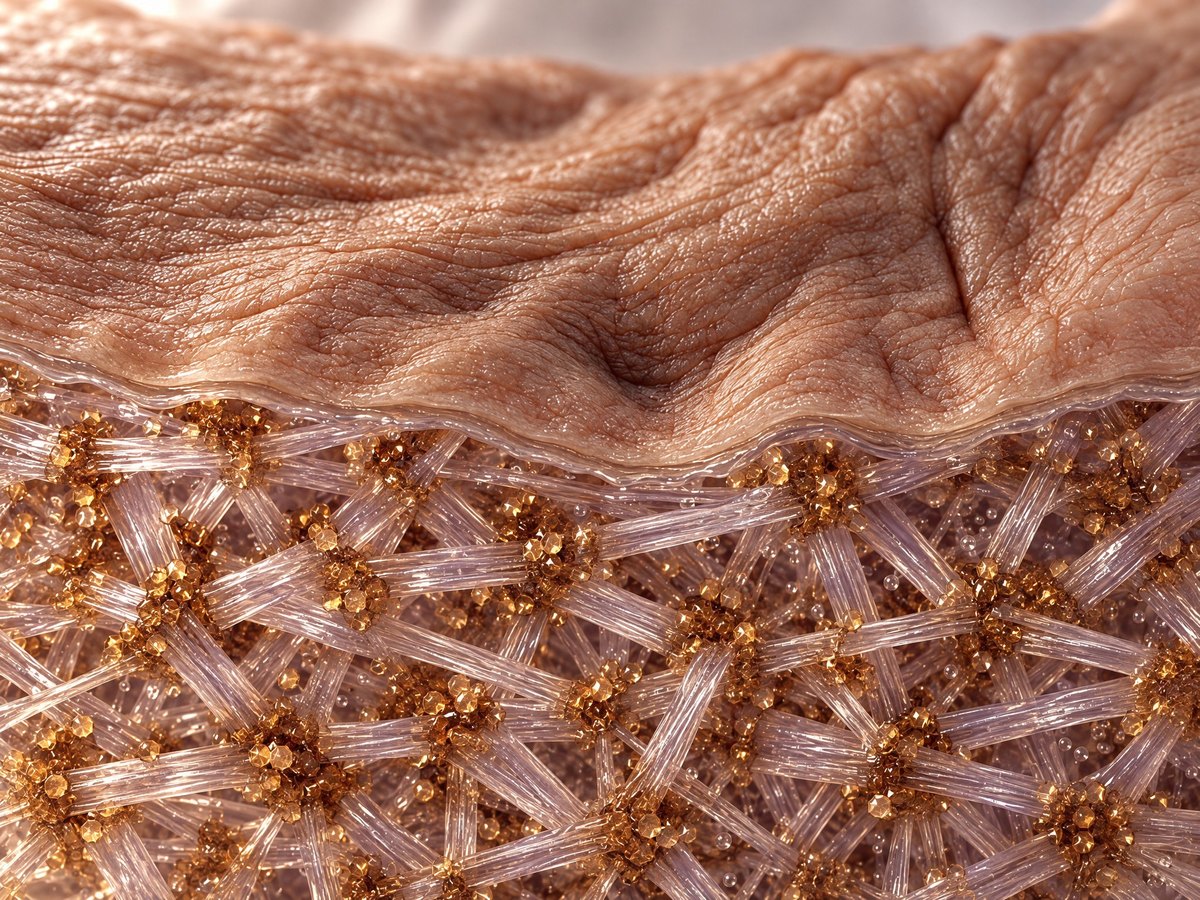
Cross-links form
Some reactions create Advanced Glycation End products (AGEs), rigid cross-links that stiffen the fibres. Stiffer fibres flex less, one of several reasons skin loses firmness.
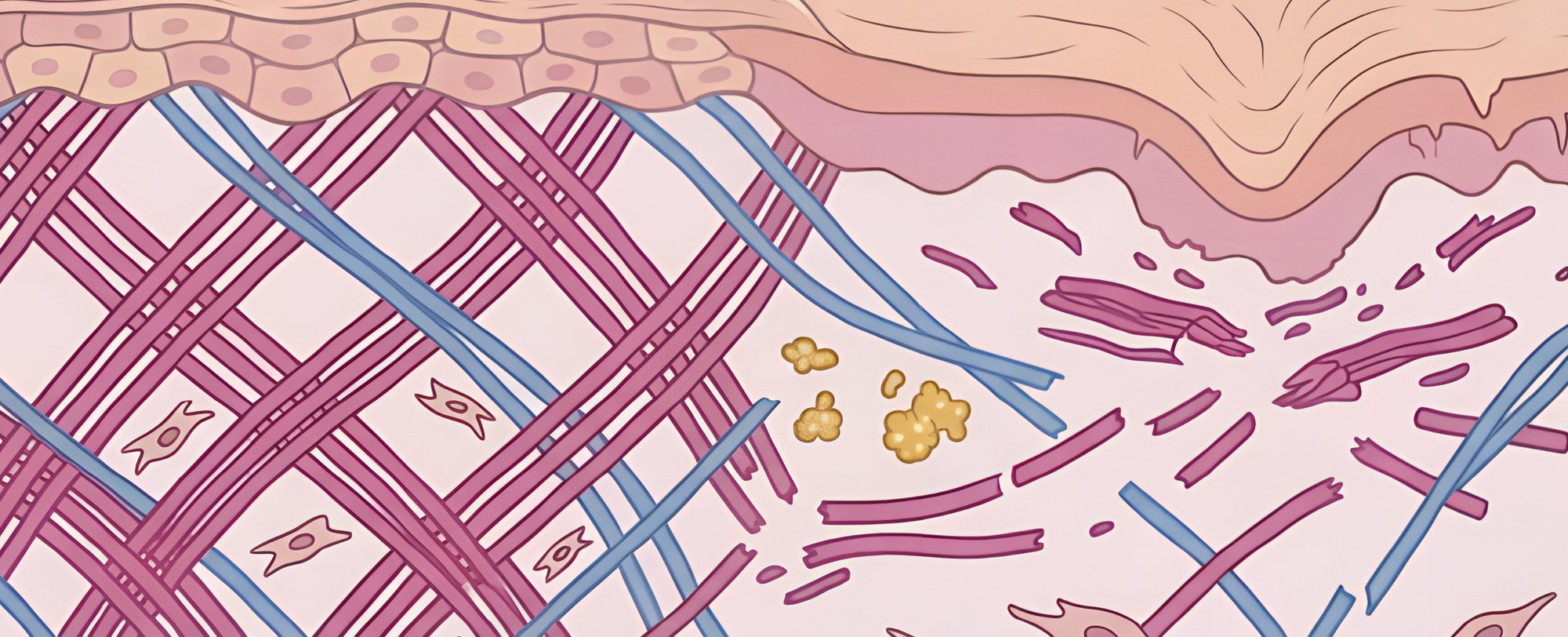
Collagen, before and after glycation
Healthy collagen forms an organised, flexible network. Glycated fibres become rigid and disordered as AGEs build up between them.
AGEs build up in skin over time
Share of human skin samples that stained positive for an AGE marker, by age group. Glycation is a measurable, age-related process in human skin.
Antibody staining of human skin samples, Drexel University College of Medicine. Data on file.
Images are for illustration purposes only.
How Supplamine® helps
Supplamine® helps interrupt sugar damage in two ways. Our patented anti-glycation technology helps address reactive compounds involved in glycation, supporting healthier-looking skin over time.

Helps Interrupt AGE Formation
Helps interfere with reactions that contribute to the formation of advanced glycation end products (AGEs).

Targets Reactive By-Products
Helps neutralize reactive intermediates involved in the glycation process, before they can contribute to collagen cross-linking.
Images are for illustration purposes only.
Clinical results, measured on skin
Each participant was measured against their own starting point.
In an 8-week open-label study of an original MEG 21 Supplamine® formula, conducted by a contract research organisation.
Still improving at week 8
Every measurement improved at each check-in, from week 2 through week 8.
Skin hydration
Increase vs. baseline
Skin firmness
Increase vs. baseline
Area of lines & wrinkles
Reduction vs. baseline
Superficial facial lines
Reduction vs. baseline
In an 8-week open-label study of an original MEG 21 Supplamine® formula, conducted by a contract research organisation. Individual results may vary.
of participants said their skin felt smoother after 8 weeks.
participants reported irritation at any point in the 8 weeks.
Self-reported at week 8. In an 8-week open-label study of an original MEG 21 Supplamine® formula, conducted by a contract research organisation.
How the 8-week study was run
In an 8-week open-label study of an original MEG 21 Supplamine® formula, conducted by a contract research organisation.

Measured at the start, then at weeks 2, 4, 6 and 8.
Clinical instruments and expert grading.
Each participant compared with their own starting point, on the full face.
Skin hydration
Measured by skin impedance with a Nova meter, an instrument that reads the water content of the outer skin layers.
Skin firmness
Measured by ballistometry, which records how skin rebounds from a light, standardised tap.
Area of lines & wrinkles
Measured by image analysis of silicone replicas of the skin surface, the most objective measure in the study.
Superficial facial lines
Graded by a trained expert on a standard clinical scale, the Packman method.
Consistent, study after study
Consistency across studies, and what Supplamine® adds on skin with a disrupted barrier. Redrawn from MEG 21's clinical dossier.
The same result, twice
A second 4-week study by the same lab, with different people, landed within 2.5 percentage points of the original on every measure.
Week-4 results of the 8-week study and of a separate 4-week repeat study, both open-label studies of original MEG 21 Supplamine® formulas, conducted by a contract research organisation.
Less visible redness
After a controlled barrier challenge, skin treated with Supplamine® showed less redness at every check-in. The same base cream without Supplamine® did no better than untreated skin.
9 of 9 panelists with measurable damage said the Supplamine® cream reduced redness most. 8 of 9 said it helped skin recover quickest.
Redness (erythema) score, lower is better. Controlled barrier-disruption study on body skin, contract research laboratory.
Better barrier recovery
Water loss through the skin is a standard measure of barrier function. Skin treated with Supplamine® lost less water than skin treated with the base cream alone, or left untreated.
Transepidermal water loss (TEWL), lower is better. Same study as the redness results.
Real people, real results
Before and after photos of skin cared for with MEG 21.
 Before
 After 28 days
Neck
Shop Décolleté →
 Before
 After 28 days
Neck, side view
Shop Décolleté →
 Before
 After 28 days
Smile line
Shop Face Treatment →
 Before
 After 28 days
Crow's feet
Shop Face Treatment →
 Before
 After 28 days
Eye area
Shop Face Treatment →
 Before
 After 28 days
Forehead
Shop Face Treatment →
Individual results may vary.
The research behind it
Supplamine® was developed from glycation research pioneered at Fox Chase Cancer Center.
Dr. Annette Tobia, PhD
Founder and Chief Scientific Officer of MEG 21
A scientist on the original glycation research, she brought the technology to skincare and continues to study glycation today.
Worked alongside the original researchers; co-author of the published placebo-controlled study.
MEG 21 began as a physician brand and is still dispensed through dermatologists, plastic surgeons and medical spas.

Published and placebo-controlled
In a double-blind, randomized, placebo-controlled study published in a peer-reviewed dermatology journal, the Supplamine® formulation significantly outperformed placebo on visual dryness of the skin. Both creams shared the same base; only one contained Supplamine®.
Patented technology
Supplamine® is our patented anti-glycation compound.
Tested on human skin
Clinical studies by contract research laboratories on face, eye area and body skin, measuring hydration, firmness, lines and wrinkles, and barrier recovery.
Gentle on skin
No adverse events were reported in the facial study.
Recommended by physicians
In their words.
What I love about MEG 21 is that it actually works — thanks to Supplamine®, their powerful, science-backed secret weapon. It does the heavy lifting, delivering real, visible improvements with smoother skin. No hype — just healthier, more resilient skin you can truly see and feel.

MEG 21 products are by far the best topical treatments for deep moisturizing and anti-aging effects that I have found. When I recommend MEG 21, I speak from both science and personal experience. It makes skin supple — less wrinkled, less dry, less 'hard.'

MEG 21 offers effective moisturization, addresses skin firmness and reduces fine lines and wrinkles in as little as four weeks.

The words, in plain English
Glycation
A natural reaction in which sugar binds to proteins such as collagen and elastin.
AGEs
Advanced glycation end products: the end result of glycation. They build up in skin over time.
Collagen cross-linking
Rigid bonds that AGEs form between fibres, leaving them stiffer and less flexible.
Reactive by-products
Short-lived compounds formed along the way to AGEs. Supplamine® helps target them.
Questions about the science

What is glycation?
A natural reaction in which sugar binds to proteins such as collagen and elastin. Some of these reactions form advanced glycation end products (AGEs), rigid cross-links that stiffen the fibres. Stiffer fibres flex less, one of several reasons skin loses firmness.
What does Supplamine® do?
Supplamine® is our patented anti-glycation technology. It helps interfere with reactions that contribute to AGE formation, and helps neutralize reactive intermediates involved in glycation before they can contribute to collagen cross-linking.
Which products contain Supplamine®?
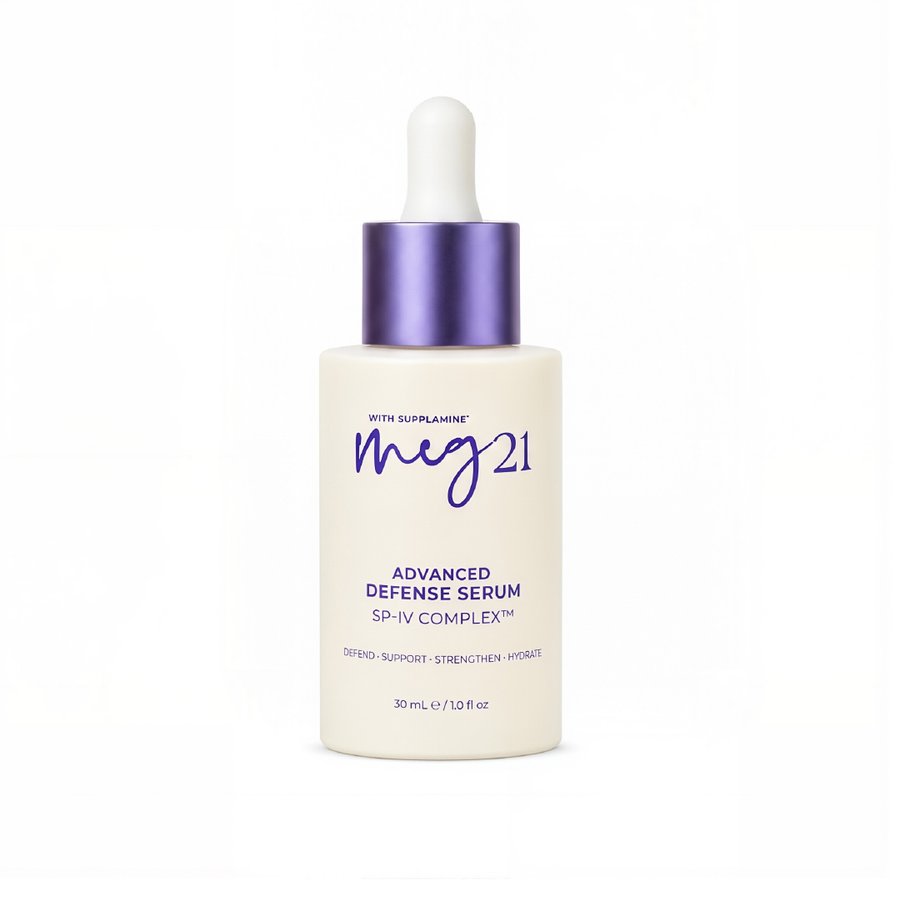
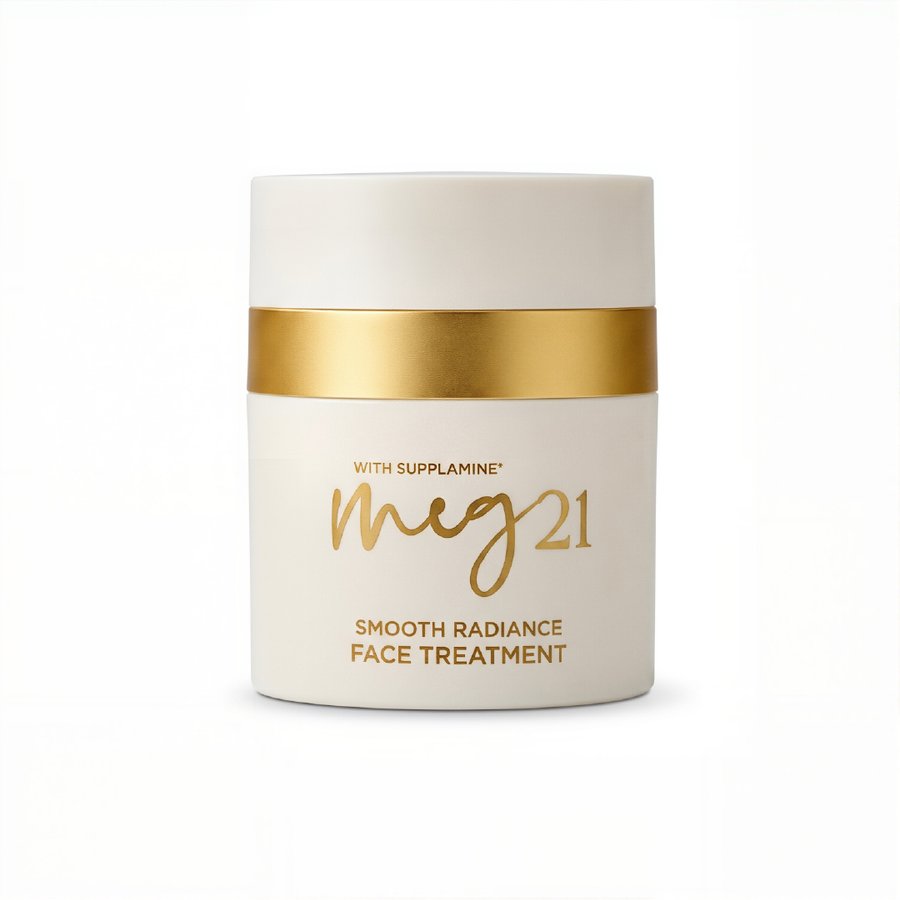
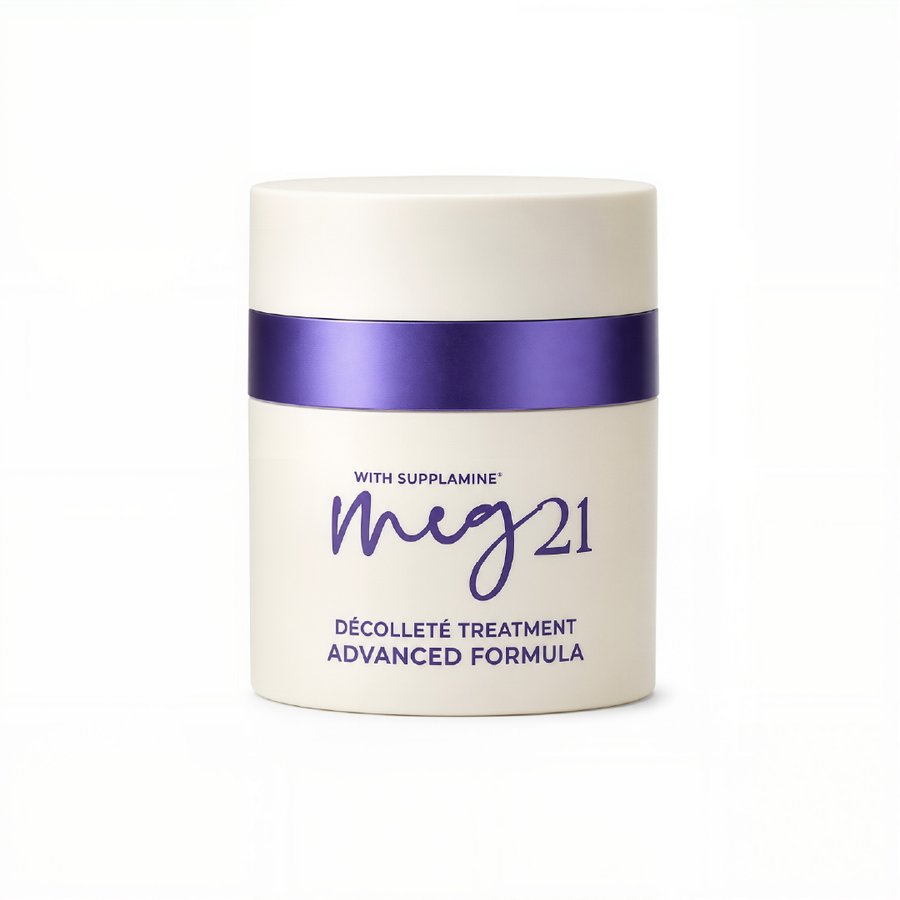
Every MEG 21 treatment carries Supplamine®: Advanced Defense Serum, Smooth Radiance Face Treatment, Décolleté Treatment Advanced Formula and Bright & Firm Eye Treatment. Daily Mineral Shield SPF 30 is your daytime protection step.
Does it replace my retinol, vitamin C or sunscreen?
No. Those address cell turnover, oxidative stress and UV. MEG 21 targets glycation, a separate driver of skin aging, so it adds to your routine rather than replacing anything.
What did the clinical studies show?
In an 8-week open-label study of an original MEG 21 Supplamine® formula, conducted by a contract research organisation, skin hydration rose 62.9%, firmness improved 35.4%, the area of lines and wrinkles fell 44.2% and superficial facial lines fell 50.5%. Every measurement kept improving through week 8.
Were today's products clinically tested?
The clinical studies were run on original MEG 21 Supplamine® formulas. Their results are evidence for the Supplamine® technology and are not presented as the result of any individual current product.
Is it suitable for sensitive skin?
No adverse events were reported in the facial study. After a procedure, follow your practitioner's post-care instructions first.
How long before I see results?
In the clinical study, results were measurable from week 2 and kept improving through week 8. Use your treatments consistently and judge the results at eight weeks.
Individual results may vary.
Supplamine®, in every treatment
Four treatments, one technology. New to MEG 21? The Anti-Glycation Discovery Kit has the whole routine in travel sizes.


Try MEG 21 with the Discovery Kit
Five travel sizes of the MEG 21 anti-glycation range in a custom cosmetic bag: the serum, two treatments, the eye treatment and the mineral SPF. The whole routine, before you commit to full sizes.
Shop the Discovery Kit — $30The studies were run on original MEG 21 Supplamine® formulas. Results describe the Supplamine® technology, not any individual current product.
For research and references, please reach out to professional@meg21.com