Menopause Skin: Collagen Loss, Dryness and the Routine That Helps

Images are for illustration purposes only.
One day your skin feels like yours. A few months later it is drier, a little thinner, and your favorite cream no longer seems to do much. If that sounds familiar, you are not imagining it. Perimenopause and menopause bring some of the fastest skin changes most women ever experience.
Here is what is happening, why collagen loss and glycation matter, and how to build a routine that supports your skin through this stage, without a cabinet full of products.
What happens to skin during menopause?
Estrogen does a lot of quiet work for skin. It supports collagen, helps skin hold on to moisture and plays a part in keeping it plump and resilient. As estrogen levels fall through perimenopause and menopause, many women notice:
- Dryness, sometimes with a tight or itchy feeling.
- Thinner, more delicate skin, especially on the face, neck and hands.
- Loss of firmness along the jawline, neck and chest.
- Fine lines and crepiness that appear more quickly than before.
- Dullness, as skin renews itself more slowly.
Everyone's experience is different. If you have questions about hormonal changes, symptoms or hormone therapy, talk to your doctor. Skincare is cosmetic, and it is one part of feeling good in your skin.
Collagen loss: the numbers behind the change
Collagen is the protein that gives skin its structure. According to the American Academy of Dermatology, studies show that women's skin loses about 30% of its collagen during the first five years of menopause, after which the decline becomes more gradual.
That is why the change can feel sudden. It is also why the years around menopause are such a good time to give your skin some extra, consistent care.
Glycation: the other half of the story
Hormones are not the only thing affecting collagen. Throughout life, sugar molecules attach themselves to collagen and elastin in a natural process called glycation. Over time this forms Advanced Glycation End-products (AGEs), which make those fibers stiff and less elastic.
Glycation adds up gradually, year after year. So in midlife, two things meet: less new collagen, and more of the existing collagen stiffened by sugar. Together, they help explain why skin can suddenly look less firm and more crepey. (Read more in What Are AGEs?)
Why skin changes in midlife
1
Less estrogen
Skin holds less moisture, and collagen production slows.
2
More glycation
Sugar-stiffened collagen and elastin build up over the years.
3
Visible change
Dryness, thinning, crepiness and a softer jawline.
A menopause skincare routine that helps
The best menopause routine is gentle, hydrating and consistent. Here is a simple framework.
1. Cleanse gently
Skin that is thinner and drier does not need harsh foaming cleansers or daily scrubs. Choose a soft, non-stripping cleanser and lukewarm water.
2. Hydrate and support firmness
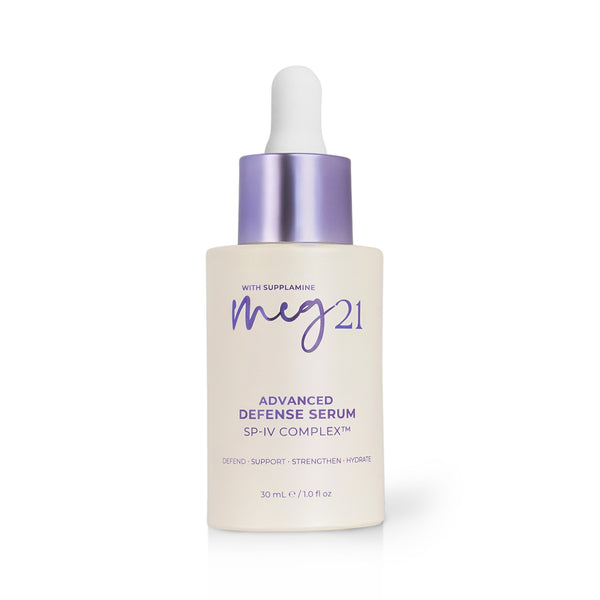
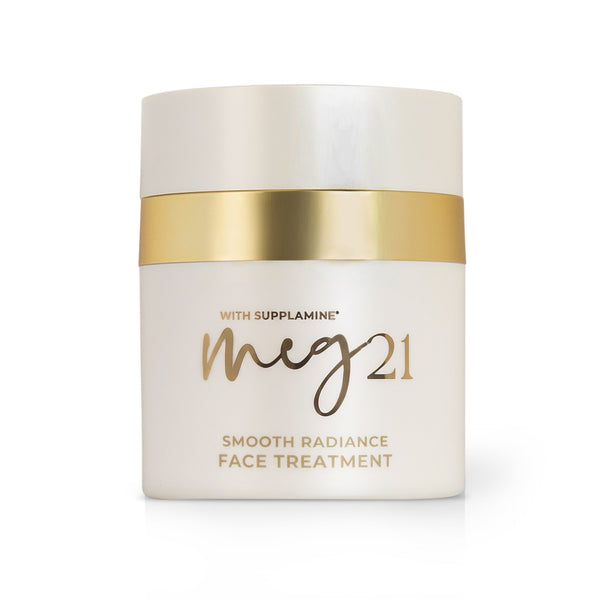
This is the heart of the routine. Smooth Radiance Face Treatment is an everyday cream built around Supplamine®, MEG 21's anti-glycation complex, designed to help interrupt glycation so collagen and elastin are better supported. For a more concentrated step, layer Advanced Defense Serum SP-IV Complex™ underneath.
What the research measured
+62.9%
hydration
+35.4%
firmness
−44.2%
area of lines & wrinkles
−50.5%
superficial facial lines
In an 8-week open-label study of an original MEG 21 Supplamine® formula, conducted by a contract research organisation.

3. Don't stop at your jawline
The neck and chest often show menopause changes first, because the skin there is thinner and has fewer oil glands. Décolleté Treatment Advanced Formula is made for exactly that area. Smooth it upward from chest to jaw, morning and night.

4. Be kind to the eye area
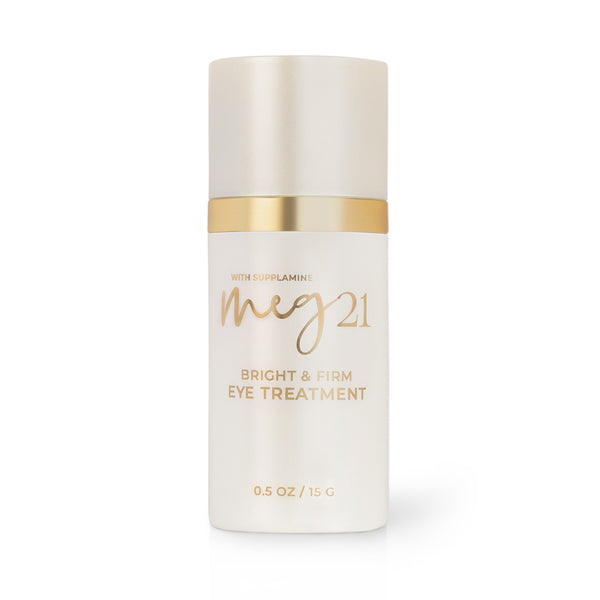
The skin around the eyes is the thinnest on the face. A lightweight formula such as Bright & Firm Eye Treatment helps it look brighter and smoother without heaviness.
5. Protect, every single morning
UV exposure breaks down collagen and is linked with more glycation, so daily sun protection matters even more now. Daily Mineral Shield SPF 30 is a tinted mineral sunscreen that suits sensitive, changing skin.
An easy way to build it: the Face + Décolleté Set
If you want to cover the two areas where menopause changes show most, the Face + Décolleté Set pairs Smooth Radiance Face Treatment with Décolleté Treatment Advanced Formula. Just want to try the routine first? Start with the Anti-Glycation Discovery Kit.
Lifestyle habits that show on your skin
- Go easy on added sugar. Less sugar means less fuel for glycation.
- Eat enough protein and good fats. Your skin is built from what you eat.
- Prioritise sleep. Night sweats can make this hard. If they do, talk to your doctor.
- Use a humidifier in dry or heated rooms.
- Keep moving. Exercise supports circulation and mood.
The takeaway
Menopause skin changes are real, common and nothing to hide. Falling estrogen slows collagen, and glycation stiffens what is there. A calm routine of hydration, anti-glycation care and daily SPF gives your skin consistent support through this stage and beyond. To see how it works, explore the science behind Supplamine®.
Frequently asked questions
Why does skin get so dry during menopause?
Falling estrogen affects how well skin holds on to moisture and how much oil it produces. A gentle cleanser, a rich treatment cream and daily SPF help. If dryness comes with other symptoms, talk to your doctor.
How much collagen do you lose in menopause?
According to the American Academy of Dermatology, studies show women's skin loses about 30% of its collagen in the first five years of menopause, after which the decline is more gradual.
What is the best skincare for menopausal skin?
Look for gentle, hydrating products, firmness-focused care for the face, neck and chest, and a daily mineral SPF. MEG 21's treatments add anti-glycation care with Supplamine®.
Is MEG 21 suitable for sensitive, menopausal skin?
MEG 21 treatments are designed for daily use. If your skin is very sensitive, patch test first and introduce one product at a time.
About MEG 21
Developed by Dr. Annette Tobia, PhD, and dispensed by physicians, MEG 21 is anti-glycation skincare built on Supplamine®. Explore the science.


Shop the routine
Every MEG 21 treatment is built around Supplamine®. Start with one, or pair them.