"Ozempic Face" & GLP-1 Skin: The Sugar Connection
Images are for illustration purposes only.
If you have scrolled through beauty news in the past year, you have met the phrase "Ozempic face". It describes something many people notice after losing weight quickly on a GLP-1 medication: a face that suddenly looks a little less full, a little softer at the jaw, and somehow more tired than the number on the scale would suggest.
It is a real conversation, and an understandable one. But beneath the headlines sits a quieter story about skin itself, and about sugar. At MEG 21, sugar's effect on skin is the whole point of what we do. So here is a calm, cosmetic-only look at what people are seeing, what dermatologists say, and where daily anti-glycation care fits.
Talk to your doctor. This article is about how skin looks and feels, not about any medication. MEG 21 products are cosmetic. They are not a treatment for any condition and are not connected to any prescription. If you take a GLP-1 medication, or are considering one, your prescribing doctor is the right person for every question about it, and a board-certified dermatologist is the right person for questions about skin changes.
What "Ozempic face" actually describes
"Ozempic face" is not a medical diagnosis. It is an informal, social-media name for the facial changes some people see during significant weight loss. The American Academy of Dermatology describes patients noticing less plumpness in the face, sagging, wrinkles and a crepe-like texture after starting a GLP-1 drug. Dermatologists quoted by the AAD say this is partly about rapid weight loss itself: anyone who loses weight quickly tends to see it in their face first.
In plain terms, people tend to describe four things:
- Volume. Fat pads that once cushioned the cheeks and temples look smaller, so the face can read as more angular.
- Laxity. Skin that was supported by that volume can look looser, especially along the jaw and neck.
- Dryness. Eating and drinking patterns often change, and skin can feel tighter and look duller.
- Texture. Fine, crinkled lines (the "crepey" look) become easier to see, on the face and on the neck and chest.

Where sugar comes in
Volume is a matter for your doctor and, if you choose, a qualified injector. The surface of your skin, though, is something you care for every day, and that is where sugar matters.
Glycation is the natural process in which sugar molecules attach to proteins in the skin, including collagen and elastin, the fibers that help skin look firm and springy. Over time this forms Advanced Glycation End-products, or AGEs. Dermatology reviews, such as Danby's "Nutrition and aging skin: sugar and glycation" in Clinics in Dermatology, describe how these sugar-linked fibers become stiffer and less resilient. The visible result is the kind of dull, less bouncy, finely creased skin that many people notice more clearly once facial volume changes.
Glycation is not caused by any medication. It happens to everyone, quietly, all the time. But when skin is under change, whether from weight loss, hormones or simply the years, keeping that surface well cared for becomes more noticeable. You can read more about the process in our story on sugar and skin aging and on The Science page.
Skin in transition: what changes, and who helps
Volume
Fuller cheeks and temples can look smaller. Talk to your doctor or a qualified provider.
Dryness
Skin feels tighter and looks duller. Hydrate morning and night.
Texture
Fine, crepey lines show more. Anti-glycation care for a smoother look.
Sun
Daily exposure adds up. Mineral SPF 30 every morning.
A cosmetic routine for skin in transition
Dermatologists' advice for skin during weight loss is reassuringly simple: be gentle, keep skin hydrated, moisturize face and body, drink enough fluids and wear a broad-spectrum sunscreen every day. Here is how a MEG 21 routine sits around those basics.
1. Hydrate, then defend
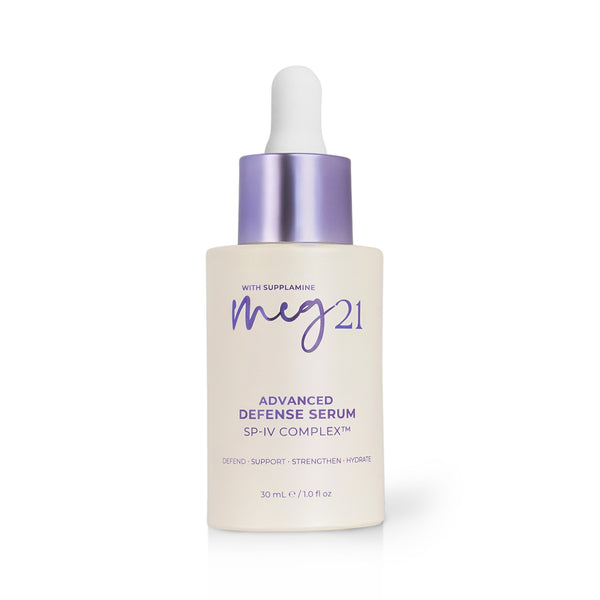
Start with a lightweight serum on clean skin morning and night. Advanced Defense Serum pairs Supplamine® with our SP-IV Complex™ to hydrate and help interrupt glycation at the surface, so skin looks smoother and more supple.
2. Cushion the face
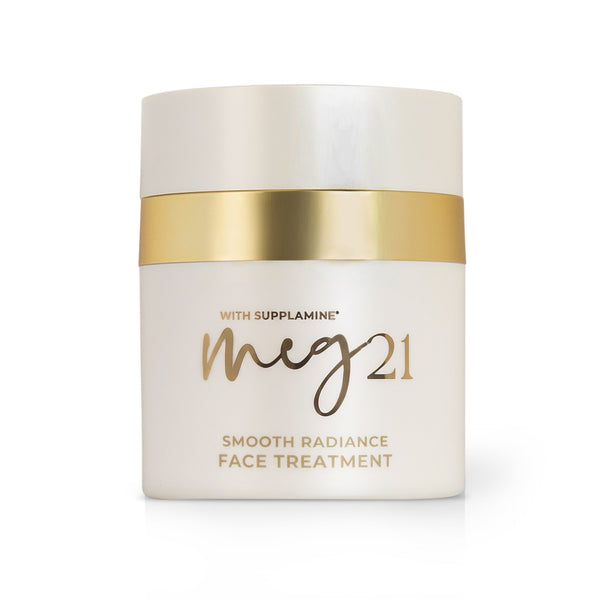
Follow with Smooth Radiance Face Treatment, a light daily cream with Supplamine® and soothing bisabolol that sits comfortably under SPF and makeup.
3. Do not forget the neck and chest
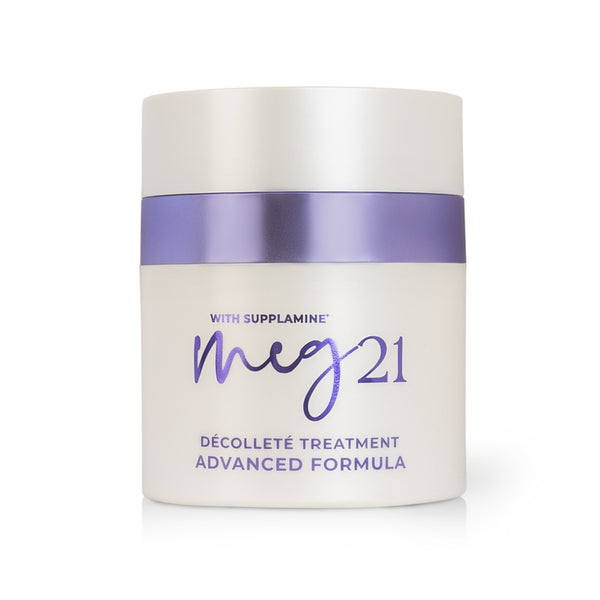
The neck and décolleté often show change first and get the least attention. Décolleté Treatment Advanced Formula is our richest cream, with the highest concentration of Supplamine® in the MEG 21 line, made for thinner, crepey-looking skin below the jaw. Our guide to tech neck and crepey chest goes deeper.
4. Protect every morning
Finish with a broad-spectrum mineral sunscreen. Daily Mineral Shield SPF 30 is tinted and 100% mineral, and it is the step that protects everything else you do.

What a cream can and cannot do
We want to be clear. No skincare restores lost facial volume, and no cream changes how any medication works. If volume loss is what bothers you most, that is a conversation for your doctor or a qualified aesthetic provider, who may discuss in-office options. Anti-glycation skincare has a different job: helping skin look hydrated, smoother and more resilient day to day, and keeping the surface in good condition between appointments. You can see what that looks like on our Results page.
Think of it as the steady, unglamorous part of the plan. The part you control every morning and every night.
Frequently asked questions
Is "Ozempic face" permanent?
It depends on the person and on many factors only your doctor can assess. Some changes relate to weight loss itself. Talk to your doctor or a board-certified dermatologist about your own situation.
Can skincare fix Ozempic face?
No skincare can restore facial volume. A good routine can help skin look more hydrated, smoother and better cared for, which makes a visible difference to texture and glow.
Is MEG 21 safe to use while taking a GLP-1?
MEG 21 products are cosmetic and are applied to the skin. They are not designed around, or tested with, any medication. If you have questions about using any product alongside your treatment, ask your doctor.
What does sugar have to do with it?
Glycation, sugar binding to collagen and elastin, is part of how all skin ages. It is not caused by GLP-1 medications, but caring for it helps skin look its best while it is changing.
Shop the routine
Everything mentioned in this story, in the order you would apply it.
- Advanced Defense Serum, $175
- Smooth Radiance Face Treatment, $130
- Décolleté Treatment Advanced Formula, $150
- Daily Mineral Shield SPF 30, $60
New to MEG 21? The Anti-Glycation Discovery Kit ($30) holds travel sizes of all five, so you can try the full routine first.
Always follow your provider's instructions. Talk to your doctor about any medication or treatment.
Shop the routine
Every MEG 21 treatment is built around Supplamine®. Start with one, or pair them.