Sugar & Skin Aging: How Blood Sugar Shows on Your Face

Images are for illustration purposes only.
You already know sugar shows up on the scale and in your energy levels. What fewer people realize is that it can show up on your face, too. Not overnight, and not from one slice of birthday cake, but slowly, through a natural process called glycation.
Dermatologists have a memorable name for the result: "sugar sag." Here is what it means, what it looks like in the mirror, and the simple habits and skincare that help.
What is glycation?
Glycation happens when sugar molecules in the body, mainly glucose and fructose, attach themselves to proteins without any enzyme guiding the process. In skin, the proteins they latch onto include collagen and elastin, the springy fibers that keep skin looking firm, smooth and bouncy.
Over time these sugar-protein bonds turn into Advanced Glycation End-products, known as AGEs. In his review "Nutrition and aging skin: sugar and glycation", published in Clinics in Dermatology, dermatologist F. William Danby describes how glucose and fructose link the fibers that support the deeper layers of skin. Fibers that were once flexible become stiff and brittle, a little like a rubber band left in the sun.
Glycation is part of how every person's skin ages. It never fully stops, and it is not a sign that you have done anything wrong. But it is one of the aging processes you can influence, from the inside and from the outside.
How sugar shows up on skin
Sugar meets protein. Glucose and fructose attach to collagen and elastin, with no enzyme guiding them.
AGEs form. Over time these bonds become Advanced Glycation End-products.
Fibers stiffen. Once-springy fibers turn stiff and less resilient.
You see it. Dullness, lost bounce, fine lines and crepiness, often first on thin skin.
What helps: less added sugar, gentler cooking, daily SPF and skincare with Supplamine®, which helps interrupt glycation.
How blood sugar shows on your face
Because glycation works on the fibers underneath, its signs are subtle at first and easy to blame on something else. These are the visible changes most often linked to "sugar sag":
- Dullness. Skin loses some of its clarity and lit-from-within look, and can take on a slightly sallow tone.
- Loss of bounce. Skin feels less springy and takes longer to "bounce back" when gently pressed.
- Fine lines and crepiness. Thin, crinkled lines appear, often first around the eyes, on the neck and across the chest, where skin is thinnest.
- Softening contours. As support fibers stiffen, cheeks and jawline can look a little less defined.

Habits that help, from the inside
The good news is that small, consistent choices add up. None of these is a strict rule, just a gentle direction of travel.
Keep added sugar in check
Swapping sweetened drinks and refined snacks for whole foods, protein, healthy fats and fiber helps keep the supply of free sugar lower and steadier. If you have any questions about your own blood sugar, your doctor is the person to ask.
Mind how you cook
The Skin Therapy Letter review "Sugar Sag: Glycation and the Role of Diet in Aging Skin" notes that grilling, frying and roasting produce much higher levels of AGEs in food than water-based methods such as boiling and steaming. A few more poached, steamed and slow-simmered meals each week is an easy change.
Sleep and protect
Rest well and wear a broad-spectrum sunscreen every single day. Sun exposure is one of the biggest outside factors in skin aging, and daily protection keeps it from adding to the load.
And from the outside: anti-glycation skincare
Diet is half the story. The other half is the skin you can actually touch. That is where MEG 21 began. Every product in our line is built on Supplamine®, a technology developed to help interrupt glycation in the skin, so it can look smoother, firmer and more hydrated. You can explore how it works on The Science page and see every ingredient on our Ingredients page.
In clinical testing of an original MEG 21 Supplamine® formula, skin moisture rose by 62.9% and skin firmness improved by 35.4% over eight weeks, and the area of lines and wrinkles was reduced by 44.2%.
In an 8-week open-label study of an original MEG 21 Supplamine® formula, conducted by a contract research organisation.
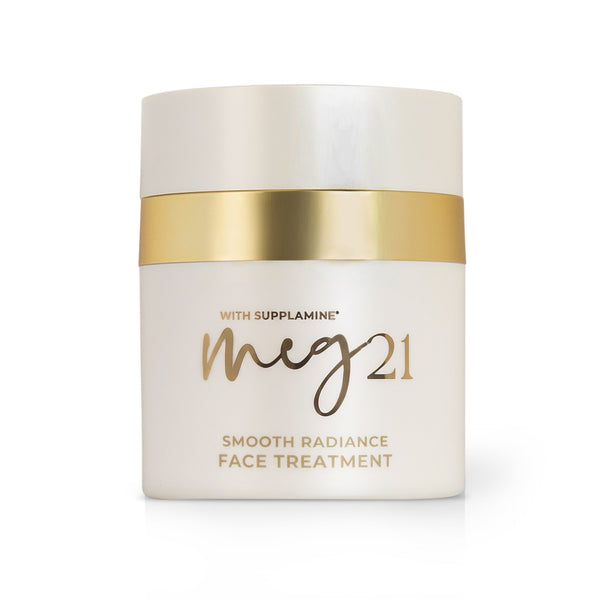
For an everyday starting point, Smooth Radiance Face Treatment is a lightweight daily cream with Supplamine® and soothing bisabolol. It layers easily under sunscreen and makeup and is the simplest way to add anti-glycation care to the routine you already have.

A simple sugar-smart routine
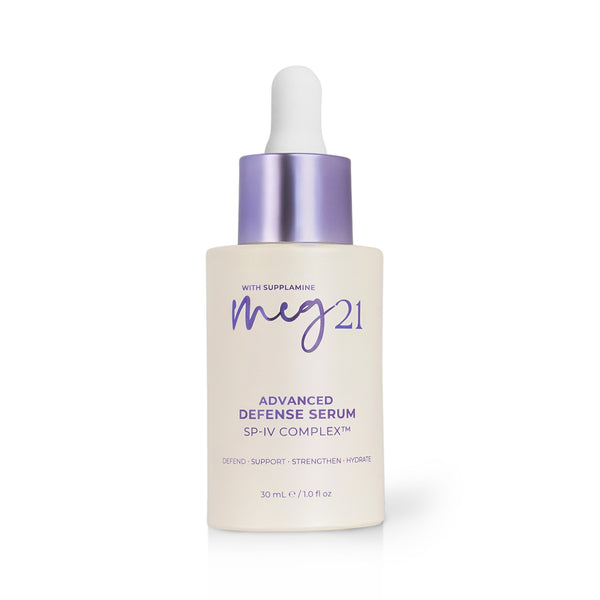
- Morning: cleanse, apply Advanced Defense Serum, then Smooth Radiance Face Treatment, then Daily Mineral Shield SPF 30.
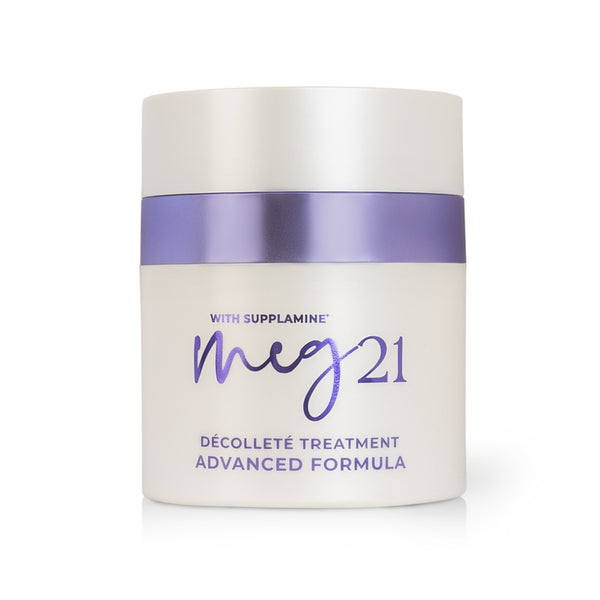
- Evening: cleanse, then serum and Smooth Radiance Face Treatment, with Décolleté Treatment on the neck and chest.
Not sure where to begin? The Anti-Glycation Discovery Kit gathers travel sizes of all five products for $30, so you can try the whole routine and see how your skin responds. And if you are curious about how sugar relates to the skin changes people notice on GLP-1 medications, read our story on "Ozempic face" and the sugar connection.
Frequently asked questions
Does sugar really age your skin?
Sugar is one of several factors. Through glycation, sugar binds to collagen and elastin, and over time that makes these fibers stiffer. It works slowly, alongside sun exposure, genetics and time.
Can glycation be undone?
Glycation is a natural, ongoing process. What you can do is support your skin: eat more whole foods, wear sunscreen daily and use skincare designed to help interrupt glycation at the surface, so skin looks smoother and more hydrated.
Do I need to cut out sugar completely?
No. Balance matters more than perfection. Reducing added sugars and choosing gentler cooking methods most days is a realistic, sustainable approach.
When will I see a difference in my skin?
Every skin is different. Give any new routine several weeks of consistent morning and evening use before judging the results.
Shop the routine
Everything mentioned in this story, in the order you would apply it.
Shop the routine
Every MEG 21 treatment is built around Supplamine®. Start with one, or pair them.