Polynucleotides vs Exosomes vs PDRN: The “Salmon Sperm Facial” Explained
If you’ve heard someone describe their last facial as “salmon sperm”, you’re not alone. Over the past year, polynucleotides and PDRN went from a niche Korean treatment to one of the most talked-about trends in beauty, with editors at The Cut calling 2025 the year we all embraced salmon sperm, and NewBeauty reporting that “salmon DNA” is taking over skincare. Exosomes arrived on med spa menus at around the same time, often in the same breath.
They are not the same thing. Here is what each one actually is, how they compare, and where your daily routine fits in.
What are polynucleotides?
Polynucleotides are chains of DNA fragments, most commonly purified from salmon or trout. In aesthetics they are typically injected into the skin, or applied during microneedling, by a trained provider. They are described as “regenerative”: the idea is to support the skin’s own renewal for better texture, hydration and elasticity over a course of sessions. They have been used in Europe and Korea for years, which is part of why they’re now so popular elsewhere.
What is PDRN?
PDRN stands for polydeoxyribonucleotide. It comes from the same source, but the DNA is broken into smaller fragments. You’ll see “PDRN” used in two places: in-clinic treatments similar to polynucleotides, and a fast-growing wave of topical serums, masks and creams, many of them from K-beauty brands. The two terms are often used interchangeably, but they aren’t identical, so ask your provider exactly what they use.
What are exosomes?
Exosomes are tiny vesicles that cells release to carry signals to other cells. In aesthetics, exosome products are usually applied after microneedling or lasers, with the promise of a calmer, glowier result. They’re exciting, but the science is younger, and beauty editors have described the category as something of a “Wild West”. The U.S. FDA has also cautioned consumers that there are currently no FDA-approved exosome products. If you’re considering an exosome treatment, ask your provider what product they use, where it comes from and what evidence supports it.

Side by side
| Polynucleotides | PDRN | Exosomes | |
|---|---|---|---|
| What it is | Longer chains of DNA fragments | Smaller DNA fragments | Tiny vesicles released by cells |
| Usual source | Salmon or trout DNA | Salmon or trout DNA | Cell cultures (varies by product) |
| How it’s used | Injected, or with microneedling, in-clinic | In-clinic, and in topical skincare | Usually applied after microneedling or lasers |
| The evidence | Growing, mostly from Europe and Korea | Growing; topical results vary by formula | Early; no FDA-approved exosome products |
| Ask your provider | How many sessions, and the spacing | In-clinic or topical, and which product | The product’s source and supporting evidence |
Why “regenerative” is the word of the year
All three belong to a bigger 2026 shift. Trend reports and beauty editors keep returning to the same theme: treatments that support the skin’s own processes and quality, rather than simply adding volume or freezing movement. It sits alongside biostimulators, skin boosters and the barrier-first approach. You can see the whole landscape in Med Spa Treatments 2026: What’s Trending.
The appeal makes sense. People want skin that looks rested, bright and firm, and that still looks like them.
Where daily skincare fits
Regenerative treatments happen in a clinic, a few times a year. Your skin lives the rest of the year at home, and the everyday stresses on it keep going between sessions: UV, dryness and glycation.
Glycation is the quiet one. It’s the process where sugars bind to collagen and elastin, making those fibres stiffer, so skin looks less firm, less smooth and less radiant over time. It happens every day, whatever treatments you have booked.
MEG 21 is built around Supplamine®, an anti-glycation complex that helps interrupt visible glycation on the skin’s surface. It’s a daily topical, not an in-clinic treatment, and it’s designed to complement whatever you and your provider choose. You can read the full story on our science page and see what’s in each formula on our ingredients page.

A simple routine around regenerative treatments
- Straight after a session: only what your provider recommends.
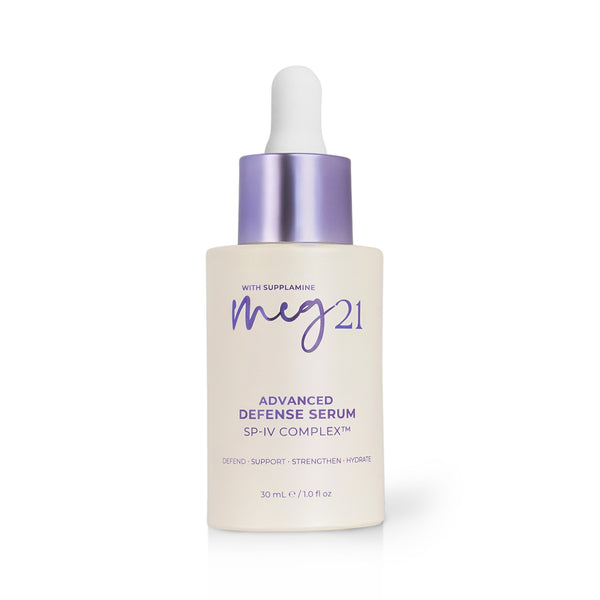
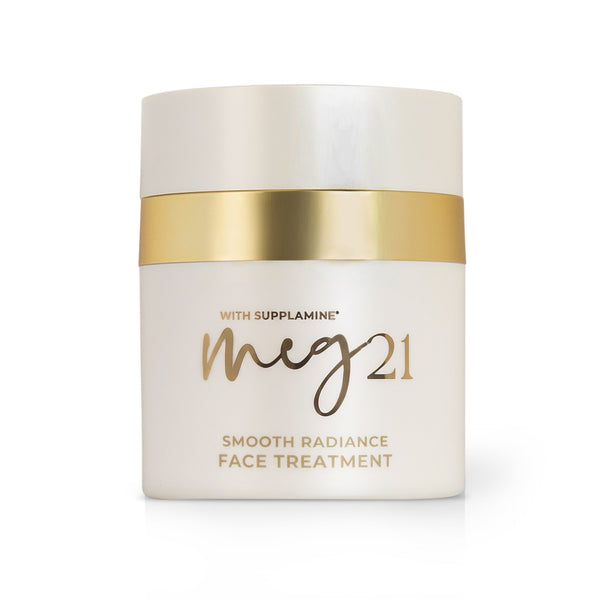
- Once your provider says your skin is ready: Advanced Defense Serum morning and night, with Smooth Radiance Face Treatment for daily hydration.
- Every morning: Daily Mineral Shield SPF 30, a 100% mineral, tinted SPF 30.
Want to try the full routine first? The Anti-Glycation Discovery Kit holds five travel sizes.
FAQ
Is the “salmon sperm facial” really made from salmon sperm?
Polynucleotides and PDRN are usually purified DNA fragments sourced from salmon or trout. The nickname comes from that origin; the final product is highly processed and purified.
What’s the difference between polynucleotides and PDRN?
Both come from the same kind of DNA, but PDRN uses smaller fragments. PDRN also appears in topical skincare, while polynucleotides are mainly used in-clinic.
Are exosomes FDA-approved?
The FDA has said there are currently no FDA-approved exosome products. Ask your provider about the specific product and its evidence before booking.
Can I use MEG 21 with these treatments?
MEG 21 is designed for daily use between treatments. Follow your provider’s aftercare first, then bring back your routine once they say your skin is ready.
Shop the routine
- Anti-Glycation Discovery Kit — $30
- Daily Mineral Shield SPF 30 — $60
- Smooth Radiance Face Treatment — $130
- Advanced Defense Serum — $175
Always follow your provider’s own aftercare instructions. This article is general skincare information, not medical advice.
Shop the routine
Every MEG 21 treatment is built around Supplamine®. Start with one, or pair them.